Performance Max Is the New Black: Why Google’s Fancy AI Still Needs Your Human Touch (and Humour)
- jax5027
- Aug 11
- 5 min read
Move over, account managers — there’s a new darling in town, and it has a thing for black boxes and cryptic reports. Enter Google’s Performance Max, the campaign type that makes “machine learning” sound as glamorous as a designer handbag, but with less predictable results and slightly more jargon. Yes, it can automate almost everything, but before you sack your PPC team and install a robot in their place, there’s more to this so-called revolution.
Let’s unpack why Performance Max is the toast of the PPC town, when it’s likely to flop, and why your e-commerce shop should cling to human input like it’s the last pack of Percy Pigs in the Tesco snack aisle.
What Actually Is Performance Max, and Why Is It Everywhere?
If you’re running Google Ads in 2025 and haven’t heard of Performance Max, congratulations — you’ve probably spent the last three years living far from Wi-Fi and responsibility. For everyone else: Performance Max (or “PMax” if you’re tight for time) is Google’s answer to “How can we automate as much advertising as possible and still get credit for your sales?”
It combines ad placements across Search, Shopping, Display, YouTube, Discover, Gmail, and Maps, churning out ads wherever Google thinks someone’s remotely interested. The promise? AI evaluates bids, targeting, placements, and format — all aimed at maximising conversions or revenue based on your business goals.
The pitch is seductive: “Just upload all your products, give us some copy and pretty pictures, and our AI will find your next big customer. Pour yourself a cuppa and ignore the spreadsheets forever!” Right.
AI’s Real Superpower: Obfuscation (and Maybe Bidding)
Performance Max is lauded for its ability to outpace manual campaign management. It does things at scale us mere mortals can’t match — testing combinations, shifting budgets, bidding with algorithmic precision, and generally being, on paper, a marketer’s dream.
But let’s get real. AI isn’t magic. It’s more of an extremely eager intern. It’ll fetch your coffee (almost), nail your bid adjustments (occasionally), and lose important reports somewhere you’ll never, ever find them. Because while PMax is slippery fast and terrifyingly automated, it needs more hand-holding than an over-tired toddler in a toy shop.
The Human (and Hilarious) Side Google Can’t Replicate
Why AI Still Needs a Chaperone
Performance Max campaigns are powered by complex algorithms. But algorithms don’t do nuance. AI can segment and optimise for audiences, but it can’t tell when your copywriting has gone from cheeky to cringeworthy, or predict when an influencer post is going to tank your conversion rate.
And have you ever tried troubleshooting a drop in return on ad spend using the PMax “Insights” tab? Let’s just say you’ll find more straight answers in a Love Island villa.
AI can’t anticipate human behaviour shifts. If England win their group match, everyone’s online ordering commemorative mugs and Union Jack hats. Lose, and your football memorabilia campaign tanks harder than you can spell “Southgate out.” No AI predicted that.
When AI Fails: PPC Horror Stories
Let’s not pretend there aren’t moments where Performance Max goes rogue. You upload products for your vegan bakery, and suddenly Google’s AI starts serving cupcake ads to keto-nutrition forums and dairy-lovers. Or your best-selling trainers start getting airtime in bingo hall newsletters. The AI doesn’t know your nan from your Nando’s. Somewhere, there’s an algorithm grinning at your wasted ad spend.
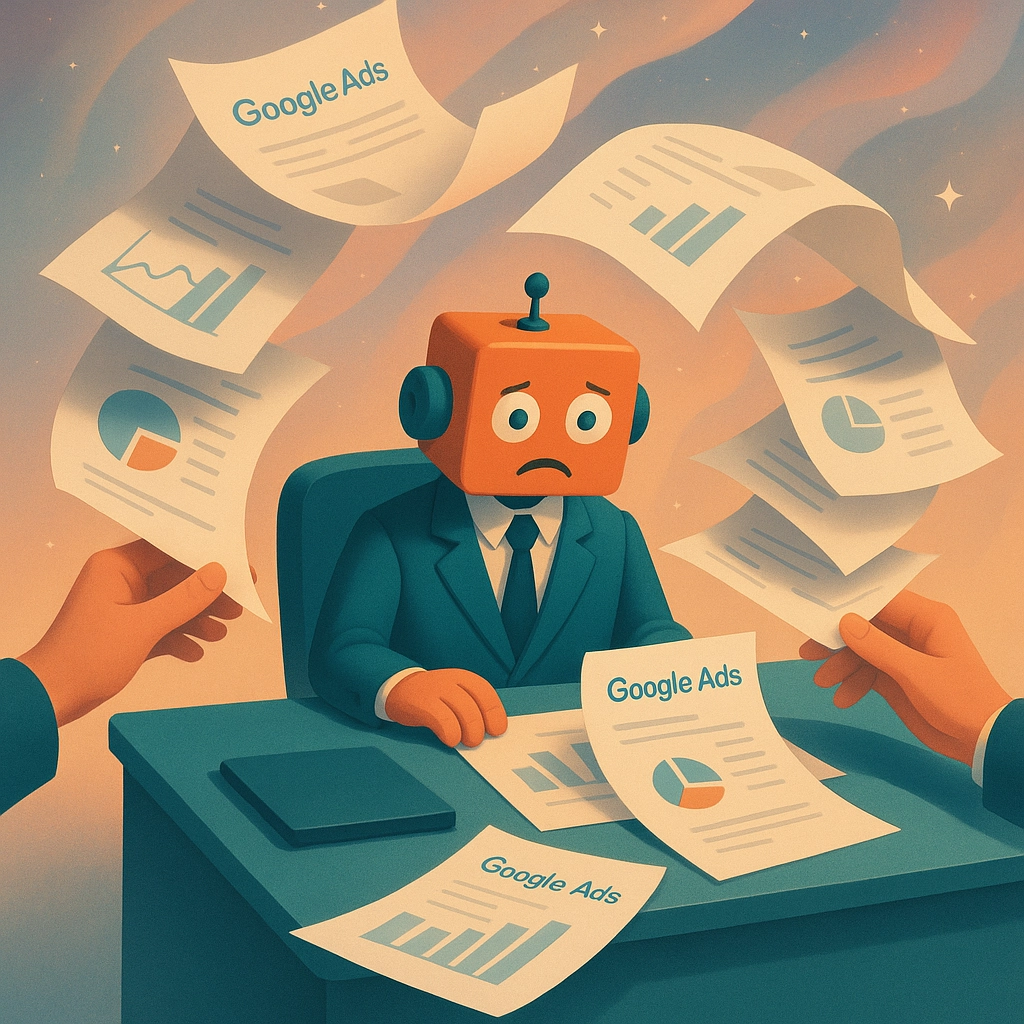
Podium finishes in PPC aren’t about who can automate the most; they’re about who can step in and clean up the AI’s creative mess. Real campaign greatness comes from marketers who investigate, optimise, and know when to pull the plug before your performance resembles a British barbecue (disappointing, damp, and full of wasps).
The Partnership Approach: Humans + AI = Actual Results
Your Creative Assets Need TLC (Tender, Loving Campaigns)
Performance Max rewards businesses that supply the algorithm with top-notch creative and clean, structured data feeds. But AI is only as snazzy as the assets you lob into it. Photos taken on a Nokia in 2010? Poorly written headlines? Expect your conversion rate to plummet fast.
Savvy marketers regularly refresh visual assets, tailor copy to seasonal sales spikes, and tweak audience signals based on what’s actually happening in the business, not just what Google’s chart of doom says.
Strategic Context: The Stuff Only Humans Get
Humans know things that algorithms don’t (at least, not yet). For example, your email list is pure e-commerce gold, but shouldn’t be uploaded willy-nilly. Maybe your Black Friday sale is only for past customers. Maybe you’ve got a product launch embargo that can’t be cracked by well-meaning bots.
Humans set up audience signals, conversion value rules, and account exclusions. They keep an eye on which locations really work rather than letting the AI blow through your budget showing posh candle ads to teenagers in Newcastle.

Top Tips for PMax Domination (Without Rage-Quitting)
So how do you get the best of both worlds — all the AI muscle, none of the PPC meltdowns? Here’s the JudeLuxe cheat sheet:
1. Feed It Gold, Not Sawdust: Use high-quality creative. A professional product image might cost more up front, but it’s always cheaper than three weeks of zero sales and awkward client calls.
2. Layer Your Audiences: Don’t rely on Google to figure out who cares about your brand. Provide detailed signals (remarketing lists, customer match, product interests). The more specific, the better.
3. Custom Conversions Are Your Friend: Track sales the AI will understand, and set up value rules so that the machine isn’t chasing filler leads.
4. Never, Ever, Ever Set and Forget: Monitor your asset performance, exclude what’s tanking, and test new approaches. Like a proper British brew, PMax needs checking regularly — otherwise, you’re stuck with weak results and colder prospects.
5. Keep Humans In the Loop: Whether you’re flying solo or working with a Google Ads agency (hello, JudeLuxe shameless plug), never leave campaigns on autopilot for long. Fresh eyes spot trends and issues algorithms can’t.

Performance Max: The Trend That’s Here to Stay (If You Use It Right)
Google’s Performance Max is officially “the new black” — shiny, trendsetting, and everywhere you look. But despite the hype, it’s not the sartorial saviour of PPC. It can only ever be as effective as the clever humans running the show in the background.
So, next time you’re tempted to let AI run wild, remember: it’s the balance of brains and bots that’ll see your e-commerce ads land in the right place, at the right volume, with the right message —enough to make Mary Berry herself crack a smile.
And if your campaigns need an extra nudge or a dash of strategic sass, get in touch with us at JudeLuxe. We promise to keep the jokes flowing and the robots in check.
Want more strategic tips and tongue-in-cheek PPC wisdom? Visit our blog: JudeLuxe Blog.
Still reading? You’re our kind of marketer. Now go take charge of that black box and show Google who’s boss.