The Ultimate Guide to Post-Cookie PPC: How to Track Real Profit When Third-Party Data Dies
- jax5027
- Sep 4
- 4 min read
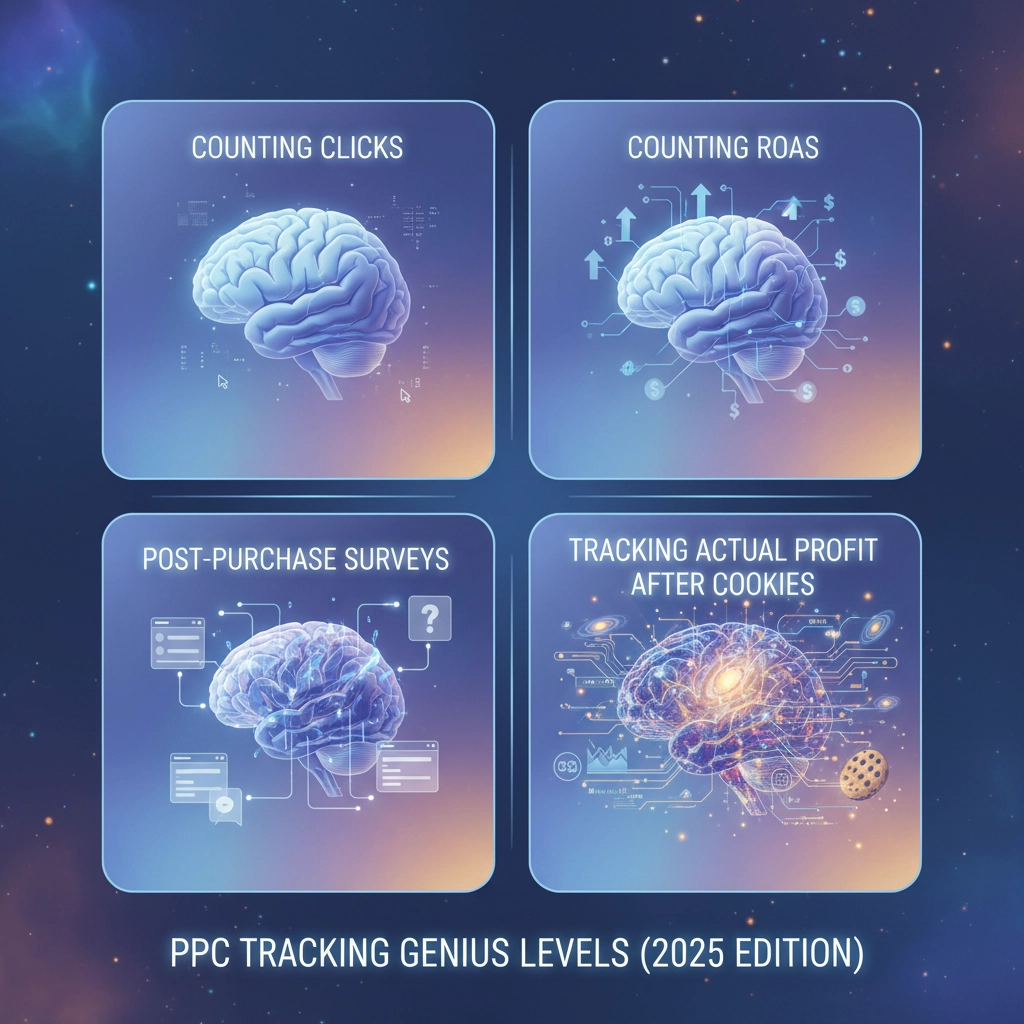
PPC Tracking Genius Levels (2025 edition)
The death of third-party cookies has PPC managers refreshing their LinkedIn feeds, waiting for the next apocalypse post. "Your ROAS is about to tank!" "Remarketing is dead!" "Time to pivot to TikTok dances!"
But here's the thing: if you're still relying on cookies to track real profit in 2025, you're already behind. At JudeLuxe, we've been preparing eCommerce brands for the cookieless world since iOS 14.5 dropped. Spoiler alert: the smart advertisers aren't panicking. They're scaling.
⸻
What's Actually Happening to Third-Party Cookies
Let's cut through the noise. Here's what's really going down:
• Chrome's Phase-Out → Google's finally killing third-party cookies after years of delays. It's happening gradually, not overnight. • Safari & Firefox → Already nuked cookies years ago. If you're only noticing now, you've been asleep. • Remarketing Lists → Traditional pixel-based remarketing shrinks, but first-party audiences still work perfectly. • Attribution Windows → Get shorter and less precise, but don't disappear entirely.
The biggest myth? That all tracking vanishes. Reality check: platforms like Google and Meta have spent billions building cookie alternatives. They're not about to let their revenue streams die.
⸻
Why Your PPC Won't Collapse (If You're Not Lazy)
Here's what the doomsday posts won't tell you: the infrastructure for cookieless tracking already exists.
Server-Side Tracking Google Tag Manager's server-side setup bypasses browsers entirely. Your conversion data flows directly from your servers to Google's, dodging cookie restrictions completely. Studies show 12.6% better cookie recognition rates compared to client-side tracking.
Enhanced Conversions & Conversion API Both Google and Meta can match conversions using hashed email addresses, phone numbers, and other first-party data. No cookies required. Your customer database becomes your tracking foundation.
First-Party Data Goldmine Every email signup, account creation, and purchase gives you direct customer data. This beats cookie crumbs every time for building profitable audiences and attribution.

⸻
The Real Problem: Lazy Tracking Setups
The brands panicking about cookies share one trait: they've been coasting on basic tracking for years.
If your setup looks like this, you're in trouble: • Facebook Pixel + Google Analytics + hope • No server-side tracking • Zero first-party data strategy • Remarketing audiences built purely on website visits
But if you've invested in proper infrastructure, the cookie death barely registers. Our eCommerce clients running Enhanced Conversions, server-side tracking, and robust first-party data systems? Their attribution accuracy actually improved in 2024.
⸻
What Smart eCommerce Advertisers Are Doing Right Now
Building First-Party Data Engines Smart brands aren't just collecting emails at checkout. They're creating value exchanges: size guides, product recommendations, exclusive previews. Every interaction builds their customer database.
Implementing Proper Server-Side Tracking This isn't optional anymore. Server-side tracking ensures your conversion data reaches platforms regardless of browser restrictions, ad blockers, or privacy settings.
Focusing on Profit, Not Vanity Metrics ROAS means nothing if you don't know your true customer lifetime value (CLV). Brands tracking profit margins, repeat purchase rates, and CLV adapt faster to attribution changes.
Leveraging Platform Intelligence Google's machine learning gets stronger with more conversion data. Smart advertisers feed platforms rich first-party signals rather than fighting algorithmic optimisation.
⸻
Your Cookieless PPC Action Plan
1. Audit Your Current Tracking Stack Map every touchpoint where you rely on third-party cookies. Identify gaps before they become profit leaks.
2. Implement Server-Side Tracking Set up Google Tag Manager's server-side container. Route all conversion data through your servers, not browsers.
3. Enable Enhanced Conversions & Conversion API Hash customer data and send it directly to platforms. This single change can improve attribution by 20-30%.
4. Build First-Party Data Collection Create compelling reasons for customers to share data voluntarily. Product quizzes, personalised recommendations, and exclusive content work brilliantly.
5. Shift to Profit-Based Bidding Stop optimising for clicks or even conversions. Optimise for customers who generate real profit. Use Value Bidding and feed platforms actual profit data.
6. Test Contextual Targeting Keywords, topics, and in-market audiences don't need cookies. They often perform better than behaviour-based targeting anyway.
⸻
The Bigger Picture: Why This Benefits eCommerce
The cookie apocalypse forces lazy competitors out while rewarding brands with sophisticated tracking. Think of it as natural selection for PPC advertisers.
Privacy-focused tracking actually improves data quality. When customers voluntarily share information, it's more accurate than inferred cookie data. Your remarketing lists shrink, but they become more valuable.
Platform algorithms get better at predicting profitable customers without relying on cross-site tracking. Google's machine learning can identify high-value prospects using search patterns, device signals, and conversion history.
⸻
Conclusion
Third-party cookies are dying, but PPC profitability isn't. The death of cookies kills lazy tracking setups, not smart advertising strategies.
eCommerce brands with robust first-party data, server-side tracking, and profit-focused bidding won't just survive the transition: they'll dominate it. While competitors scramble to rebuild broken attribution, you'll be scaling profitably.
At JudeLuxe, we specialise in cookieless PPC strategies that actually increase profit margins. Our eCommerce clients don't fear platform changes: they capitalize on them.
👉 Ready to future-proof your PPC tracking? Book a strategy session with JudeLuxe and discover how cookieless tracking can improve your profits.