The Growth Assumption
"How do we scale?" is the default question. More budget, more revenue, more growth.
But scaling isn't always the right move.
When More Spend Hurts
The Efficiency Curve
Every account has an efficiency curve:
- First £10k: Highly efficient (capturing ready buyers)
- Next £10k: Still good (slightly broader reach)
- Next £10k: Diminishing returns (prospecting less ready buyers)
- Beyond: Actively wasteful (buying awareness you can't afford)
At some point, additional spend generates negative contribution.
The Margin Squeeze
Higher spend usually means:
- Moving to less-efficient audience segments
- Competing more aggressively on bids
- Accepting worse ROAS
If your margins are tight, this shift destroys profit even as revenue grows.
The Cash Flow Reality
Google Ads spend goes out immediately. Revenue comes in 30-60 days later (after fulfilment, returns, payment processing).
Aggressive scaling creates cash flow pressure that can stress operations, inventory, and team capacity.
Signs You Should Reduce Spend
Contribution Margin is Declining
Track monthly: Revenue minus COGS minus ad spend = contribution.
If contribution margin is dropping while spend rises, you're buying unprofitable revenue.
Inventory Can't Keep Up
Spending to acquire customers you can't serve is waste. If fulfilment times are slipping or stock-outs are increasing, reduce demand until operations catch up.
Team is Overwhelmed
Customer service backing up. Returns piling up. Order errors increasing.
Growth without operational capacity destroys customer experience and LTV.
Diminishing Incrementality
More spend on remarketing doesn't create new customers. More brand budget doesn't generate new demand.
If most of your increased spend goes to these channels, you're paying for conversions that would happen anyway.
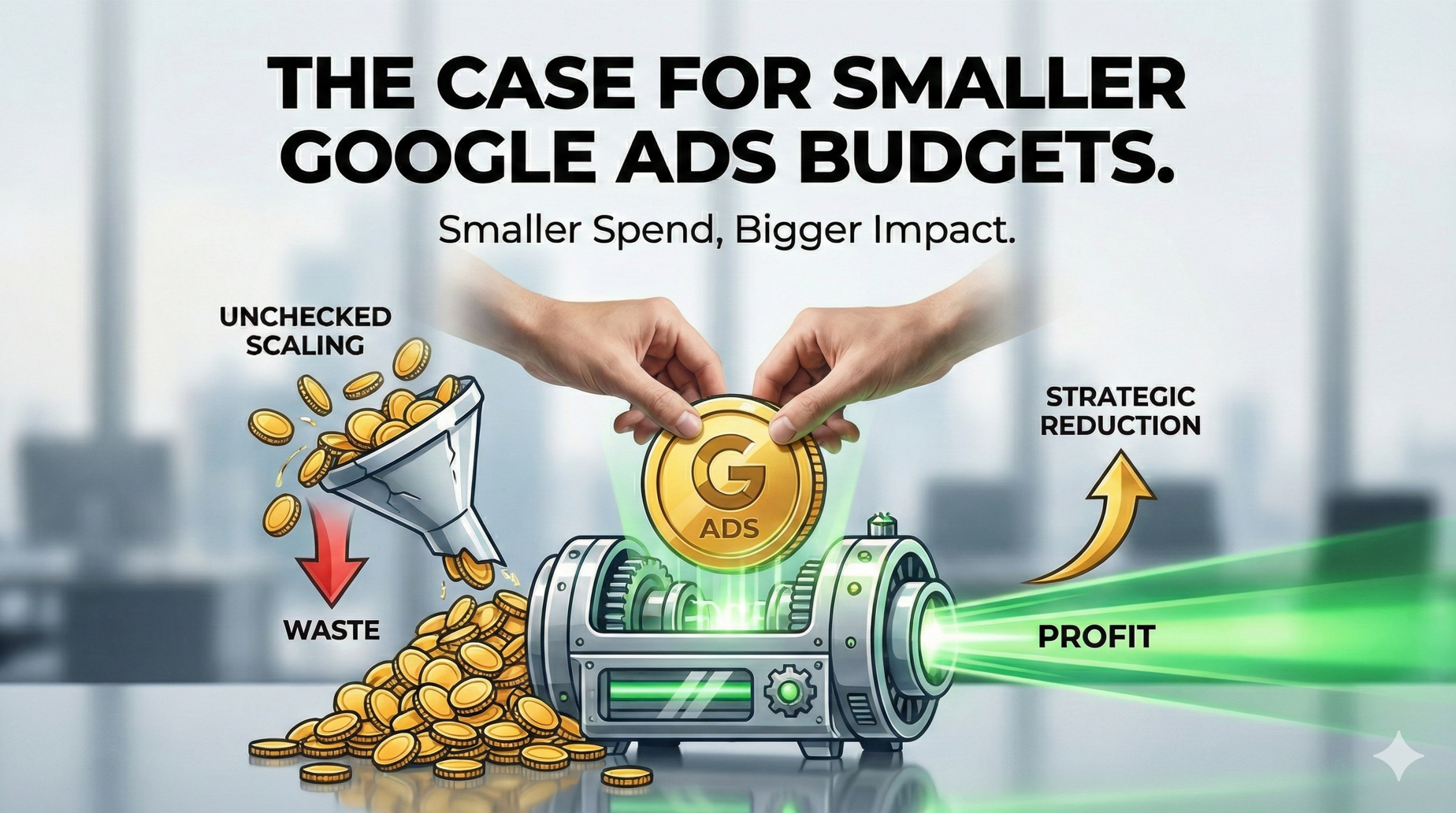
The Strategic Reduction
Cutting budget isn't failure. It's optimisation. Here's how to do it well:
1. Cut Strategically, Not Uniformly
Reduce spend on:
- Low-margin products
- Low-LTV customer segments
- High-funnel prospecting during constrained periods
- Channels with questionable incrementality
Protect spend on:
- High-margin products
- Performance Max acquisition campaigns
- Competitive terms you can't afford to lose
2. Reallocate to Retention
The budget you save from acquisition can fund:
- Email marketing improvements
- Loyalty program enhancements
- Customer experience investments
These often generate better returns than marginal acquisition spend.
3. Fix Before Scaling
Use the reduced-spend period to:
- Optimise account structure
- Improve product feeds
- Build better landing pages
- Develop creative assets
When you scale again, you'll do so more efficiently.
4. Test Incrementality
Reduce spend in specific segments or geographies. Measure whether business outcomes actually decline.
Often, you'll find less drop than expected—revealing how much spend was non-incremental.
The Right Size for Your Business
There's no universal "right" budget. The right budget is one where:
- Every pound spent returns positive contribution
- Operations can handle the demand generated
- Growth is sustainable, not just possible
Read about our spend philosophy and governance approach.
When to Scale Again
Scale when:
- Contribution margins are healthy and stable
- Operations have capacity headroom
- Product feed and account structure are optimised
- You've identified specific growth opportunities
- Cash flow supports the investment
Don't scale because "growth is good" or "competitors are spending more."
Not sure whether to scale or optimise? Our audit includes contribution analysis to determine the right budget level for your margins and goals.